Tuesday, January 29, 2013

"Dreaming of Djinn" and Other News

Dreaming of Djinn ed. by Liz Grzyb

A similar post vanished into Ether-Ether Land, so once again it's a pleasure to announce that I'll have a story in the up-and-coming anthology Dreaming of Djinn ed. Liz Grzyb (from award winning Ticonderoga Publications). It's great to see that two of the three fellow Aurealis Award finalists in the Fantasy Short Story Category last year, Thoraiya Dyer (winner) and DC White, also have stories included ('The Queen' Margo Lanagan was the other finalist).

The cover art is a beautiful piece by Ukranian artist, Nadia Starovoytova.


It was a new and daunting (but ultimately rewarding) experience to purposefully write for an anthology.
Dreaming of Djinn should be out in April/May.

Contents
18 stories by:
  • Marilag Angway "Shadow Dancer"
  • Cherith Baldry "The Green Rose"
  • Alan Baxter "On A Crooked Leg Lightly"
  • Jenny Blackford "The Quiet Realm of the Dark Queen"
  • Jetse de Vries "Djinni Djinni Dream Dream"
  • Thoraiya Dyer "The Saint George Hotel"
  • Joshua Gage "The Dancer of Smoke"
  • Richard Harland "The Tale of the Arrow Girl"
  • Faith Mudge "The Oblivion Box"
  • Havva Murat "Harmony Thicket and the Persian Shoes"
  • Charlotte Nash "Parvaz"
  • Anthony Panegyres "Oleander: An Ottoman Tale"
  • Dan Rabarts "Silver, Sharp as Silk"
  • Angela Rega "The Belly Dancing Crimes of Ms Sahara Desserts"
  • Jenny Schwartz "The Pearl Flower Harvest"
  • Barb Siples "The Sultan's Debt"
  • Pia Van Ravestein "Street Dancer"
  • DC White "A Dash of Djinn and Tonic"
Current Reads:

Just finished Homer & Langley by E.L. Doctorow and I'm currently reading The Night Circus  by Erin Morgenstern.

Saturday, January 26, 2013

Writers [on Writing]: Alice Hoffman


Writers [on Writing]: Alice Hoffman

While it does not pertain to me at all, the following quote from Alice Hoffman is valid for many writers I know:

‘Writers don’t choose their craft; they need to write in order to face the world, and this was still true for me.’
Alice Hoffman, Sustained by Fiction While Facing Life’s Facts

Wednesday, January 16, 2013

25 Highly Recommended Short Stories from my 2012 Reading


25 Highly Recommended Short Stories from my 2012 Reading


I read 134 short stories in 2012 (most of them great). I thought a cut-off at my 25 favourites would be best -  I could have listed more but lengthy lists tend to be tedious. All are the meatier kind of short story. So for lovers of the ‘long’ short story here are some more recommended gems:

from Children’s Reminiscences of the Westward Migration’ (St. Lucy’s Home for Girls Raised by Wolves) by Karen Russell      

“St. Lucy’s Home for Girls Raised by Wolves” Karen Russell (St. Lucy’s Home for Girls Raised by Wolves)

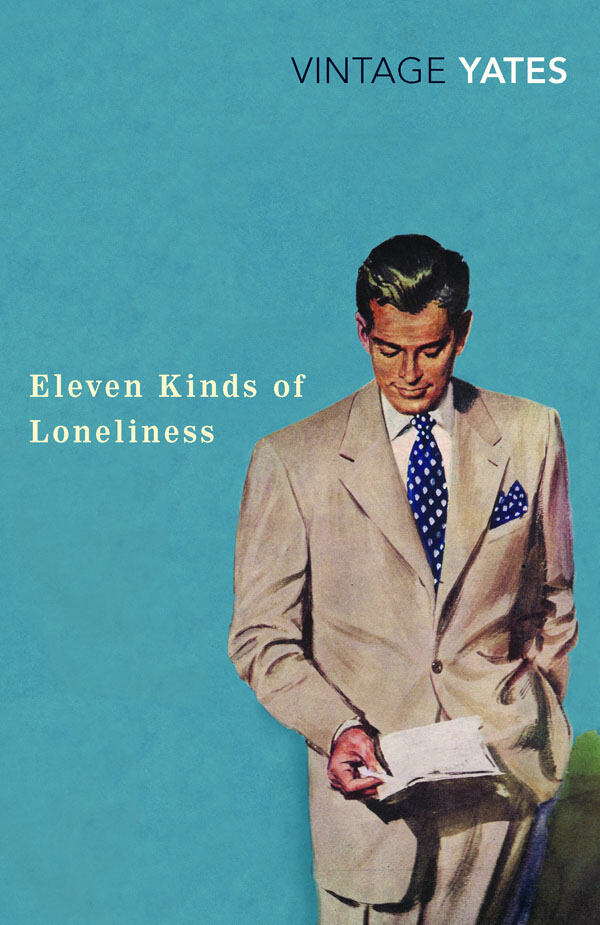
‘Out with the Old’ (Eleven Kinds of Loneliness) Richard Yates

‘Ava Wrestles the Alligator’ Karen Russell (St. Lucy’s HOME for Girls RAISED by WOLVES)                                                                 


‘A Glutton for Punishment’ Richard Yates (Eleven Kinds of Loneliness)

‘No Pain Whatsoever’ Richard Yates (Eleven Kinds of Loneliness)

‘Singing My Sister Down’ Margo Lanagan (Black Juice)

‘The Star Gazer’s Log of Summer-Time Crime’ (St. Lucy’s Home for Girls Raised by Wolves) by Karen Russell       

‘The Truth is a Cave in the Black Mountains’ Neil Gaiman (STORIES)

‘Z.Z.’s Sleep-Away Camp for Disordered Dreamers’ (St. Lucy’s HOME for Girls Raised by Wolves) Karen Russell                                                   

‘Haunting Olivia’ Karen Russell (St. Lucy’s HOME for Girls RAISED by WOLVES)

“The Coffin-Maker’s Daughter” Angela Slatter (The Year’s Best Australian Fantasy & Horror, 2011)  

‘Earthly Uses’ (Black Juice) Margo Lanagan                         

‘Images’ Alice Munro (Selected Stories)

‘The Stars are Falling’ Joe R Lansdale (STORIES)

‘Microscosmic Dog’ Michael Swanwick (Tales of Old Earth)

‘The Best of Everything’ Richard Yates (Eleven Kinds of Loneliness)
 
‘Jody Rolled the Bones’ Richard Yates (Eleven Kinds of Loneliness)

‘Walker Brothers Cowboy’ (Selected Stories) Alice Munro

‘The B.A.R Man’ (Eleven Kinds of Loneliness) Richard Yates

‘A Really Good Jazz Piano’(Eleven Kinds of Loneliness) Richard Yates

‘Doctor Jack-o’-Lantern’ Richard Yates (Eleven Kinds of Loneliness)

‘Perpetual Light’ Margo Lanagan (Black Juice)

‘Postcard’ Alice Munro (Selected Stories)

“The Hall of the Lost Footsteps” Sara Douglas & Angela Slatter (The Year’s Best Australian Fantasy & Horror, 2011)

Monday, January 7, 2013

Brief Reading and Writing Reflection, 2012


Brief Reading and Writing Reflection, 2012

BOOKS READ 2012

Swamplandia! Karen Russell

St. Lucy’s Home for Girls Raised by Wolves Karen Russell  (collection)

A Fine Balance Rohinton Mistry

Eleven Kinds of Loneliness Richard Yates  (collection)

Writers [on Writing]: Collected Essays from The New York Times  

Tales of Old Earth Michael Swanwick (collection)

Gentlemen of the Road Michael Chabon

Black Juice Margo Lanagan (collection)

I, Lucifer Glen Duncan

Specimen Days Michael Cunningham

Red Spikes Margo Lanagan  (Collection)

Treasure Island Robert Louis Stevenson

The Master of Ballantrae Robert Louis Stevenson

Brave New World Aldous Huxley

The Kite Runner Khaled Hosseini

Stories ed Neil Gaiman & Al Sarrantonio (anthology)

The Midnight Examiner William Kotzwinkle

Transition Iain Banks

New Australian Stories 2 ed. Aviva Tuffield (anthology)

Aristotle : A Very Short Introduction Jonathan Barnes

Claw of the Conciliator Gene Wolfe

Cold Comfort Farm Stella Gibbons

The House on Mango Street Sandra Cisneros (novella)

The Hobbit JRR Tolkien (reread – children’s novel)

Super-Cannes J.G. Ballard

Tomorrow When the War Began John Marsden  (Young adult)

Good Omens Terry Pratchett & Neil Gaiman

The Girl with the Dragon Tattoo Stieg Larsson

My Favourites:
Most books on this year’s list I’d happily recommend. There were, however, some personal favourites:

Novel(s):
Swamplandia! by Karen Russell was superb.  A Fine Balance by Rohinton Mistry was also excellent although I felt overly (and unnecessarily) pummelled in the final scene.

Collections: St. Lucy’s Home for Girls Raised by Wolves by Karen Russell and Richard Yates’ Eleven Kinds of Loneliness were two of the best collections that I’ve ever read.  Black Juice by Margo Lanagan and Tales of Old Earth by Michael Swanwick were also very strong, with some superb stories.

Disappointment: The Girl with the Dragon Tattoo. Less said the better.

Almost Finished

I’ll comment on the following next year

The Year’s Best Australian Fantasy & Horror, 2011 ed. Liz Grzyb & Talie Helene (which includes my Overland story: “Reading Coffee”)

Religion for Atheists Alain de Botton

Short Stories

I read 134 short stories this year and I’ll produce a list of recommended standouts soon.

Writing

It’s pleasing to say that I already have a couple of stories in line to be published in 2013. I’ll keep you posted.

Personal

In terms of celebrations, the Aurealis Awards night in Sydney for the short listed story 'Reading Coffee' was certainly a highlight. 

PS As always, feel free to email or comment if you want feedback on any book mentioned.

Monday, December 10, 2012

Linked Review of 'The Year's Best Australian Fantasy & Horror, 2011'

"Reading Coffee" received a special mention in a review of The Year's Best Australian Fantasy & Horror, 2011. It was also mentioned as one of the top stories in 'Horrorworld'...

And yes, I'm still uneasy about self-promotion.

http://sentientonline.net/?p=3749

Congrats to Tansy Rayner Roberts, Sara Douglass (posthumous) and Angela Slatter, who were also specifically praised.


I've also linked to Jane Gleeson-White's piece on her year as Overland's fiction editor:  


 Double Entry, Gleeson-White's latest work, explores how the merchants of Venice shaped the modern world and is exceptional. 


Reading wise, I've just finished the collection St. Lucy's Home for Girls Raised by Wolves by Karen Russell. It's simply fabulous. Russell's fresh and innovative voice combined with her courage to venture into the magical realist realm make her a gem. Out of the many stand outs, "from Children's Reminisces of the Westward Migration" (originally in Conjunctions) is one of my all-time favourite stories. 

Friday, October 5, 2012

Writers [on Writing]: Carl Hiaasen

Over a decade ago, I went through a mini Hiaasen phase and read at least three of his novels. They were irreverent, fast paced escapes but they also had substance in terms of political satire. When reading his essay, his well of ideas came as no surprise:

 'In the end I did what satirists throughout the ages have done: I poached from current events and embellished to suit my plot.'
                                               Carl Hiaasen, Real Life, That Bizarre and Brazen Plagiarist
                                          

Sunday, September 16, 2012

My notes from the KSP Panel on 'Breaking the Rules'

I'd like to thank Carol Ryles for inviting me to be a panelist. It was actually fun. Thanks to Guy Salvidge, Lee Battersby, Martin Livings, JB Thomas and lastly, Stephen Dedman who belatedly joined us from the audience after I invited him up at the first quarter mark (naturally with the panel's full support). There were some laughs (Lee was once a stand up comedian), we discussed writing techniques, dialogue punctuation and also the work of some great writers, such as Michael Chabon, Glen Duncan, Will Self, Joyce Carol Oates, Harlan Ellison, Kelly Link, Angela Carter and China Mieville. We also ventured into the 'what's ins' - currently zombies and werewolves - so I was glad that I could point out Angela Beamer's The Loving Dead for special attention (she was in the crowd too and participated in a later panel that I missed due to the West Coast Eagles final).  The jury was out on The Road - Guy and I loved it - and I could see that Lee appreciated Cormac McCarthy's deliberate stylistic choices but we'll leave discussion of the novel's 'worth' for another time.

Our final consensus for the panel was that any 'rule' can be broken if it improves the story. 

I slap-dashed together some notes up on 'Breaking the Rules' the night before the panel and all thirty copies went quickly afterwards, so I'll paste them at the end of this post for those that missed out. I am late, apologies.

After the panel, my bookaholic behaviour continued unabated (although I prefer to think of myself as a bibliophile). I bought Lee Battersby's newly released The Corpse Rat King, Angela Beamer's The Loving Dead and Ticonderoga's Belong (ed. Russell B Farr). Martin Livings kindly gifted me his novel Carnies too.

As for my current reads, I've just finished A Fine Balance by Rohinton Mistry, which was excellent, although hard hitting, tissue worthy stuff and I am now on Gentlemen of the Road by Michael Chabon, a delicious, easily devoured, old fashioned tale of adventure. 

Below are my notes as promised: 


BREAKING THE RULES


Many writers obey the rulebook like it is some deity requiring proskynesis. For many (because it is many rather than a few) the canons they are taught through creative writing classes or guide-to-writing textbooks are so utterly adhered to it becomes a criminal offense to drift from their beloved commandments.

My biggest tip is: Break a rule now and then. Be the crim, it’s far more exciting. And besides, what’s the time for petty crime? You’re not acting like a complete nutter.

Occasionally, telling is better than showing, as long as you do it well. Read some of the masters such as Joyce Carol Oates ( read Fossil-Figures, an exceptional story in which plenty is ‘told’), John Cheever, Will Self or the almost entirely ‘told’ but all-so-exquisite novella Memoirs of My Melancholy Whores by Gabriel Garcia Marquez. Telling with significant details can work marvels. And it’s not just a ‘South American’ thing.

Some writers blend their voices to form a hybrid narrative. Ghastly! – I hear the writing-law-abiders scream (this is their equivalent to murder). Try the Bloody Chamber and you’ll be enchanted by Angela Carter’s gift for the hybrid narrative. No one blends first and third or even first, second and third voices as well as Angela did.

Meander a little during a ‘longer’ short story (I am not a flash fiction fan). What’s wrong with a bit of character development? What’s wrong with some other threads coming into play? What’s wrong with some layering? Getting from A to B is okay for flash and pulp but at times it can be as boring as flat lemonade. Some stories need some meat. Genre fiction doesn’t always have to be pulpy. You don’t always have to ‘start late and leave early’. Each story is unique.

Try multiple settings if it works. All my stories have them.

Even a protagonist can remain unchanged throughout if it seems right. Some of Kurt Vonnegut’s characters affect the world around them, or they in turn, as Vonnegut would say ‘are tossed into a pile of shit’. Yet many of Vonnegut’s characters themselves remain constant (not all of course) and are even recycled into other works. In William Kotzwinkle’s comical masterpiece The Fan Man, Horst Badortes does not really change his essence at all. And I challenge you to find a funnier novel (after you’ve acclimatised to all those ‘mans’).

A literary piece is entitled to have a ‘real’ plot. A genre piece is entitled to be ‘literary’. My favourite works often possess both a 'literary' style and a captivating plot. What’s wrong with having both?  Try some others not mentioned: George Saunders, Kelly Link, John Varley, Harlan Ellison, Gene Wolfe, Pat Murphy, Graham Greene, Michael Chabon, Glen Duncan, Karen Russell and Sherman Alexie.

Yes, as a ‘rule’ the ‘rules’ need to be followed, but don’t be afraid to be a rule-breaker for the benefit of a piece. All of my favourite writers are wanted men and women. There isn’t an offense they haven’t committed. So my tip is learn the basic ‘rules’ but don’t be a coward when it comes to doing whatever it takes to make your story original, vibrant and have some kind of aesthetic beauty in the prose.

A small dose of anarchy can be liberating. 


Monday, September 3, 2012

KSP Mini-Con

I'll be at the KSP centre this Sunday on the writing panel 'Breaking the Rules'. I believe in being a small-time writing crim and I'm sure that the gang of rule-breakers I'll be panelling with will cause a stir.

Unfortunately, I can't participate in the 'Critting and Crowd-Sourced Editing' panel as mentioned below  as I don't 'crowd-source edit' at all.

Carol Ryles has been buzzing around to organise what will be a fantastic day for lovers of reading and writing, so come on up to the hills if you're in Perth. 

It's also the launch of Lee Battersby's novel The Corpse Rat-King, which my friend Daniel Simpsom beta-read and thoroughly enjoyed. So I'll be buying that and I'm sure that there'll be plenty of other great books around worth laying your hands on.


The 2012 KSP Speculative Fiction Writers Group Minicon
Panellists include :
Local Writers: Lee Battersby, Amelia Beamer, Hal Colebatch, Cathy Cupitt, Stephen Dedman, Joanna Fay, Satima Flavell, Sonia Helbig, Elaine Kemp, Pete Kempshall, David Kitson, Martin Livings, Dave Luckett, Juliet Marillier, Ian Nichols, Anthony Panegyres, Carol Ryles, Guy Salvidge, JB Thomas.
When: Sunday, 9 September, 2012  9.30am-4.30pm
Where: Katherine’s Place, 11 Old York Road, Greenmount (Turn into the first driveway after you turn in from the highway and park at the back)
Cost: $15, or $10 if you book in advance. Leave a comment at http://kspminicon.blogspot.com.au/if you want to do this.
Lunch: A decent meal and tea and coffee will be available for a gold coin donation or you can BYO – there are no eateries in the vicinity.

Discussion Panels: Meeting Room
10:00 Breaking the Rules
“Look, that’s why there’s rules, understand? So that you think before you break ‘em.” – Terry Pratchett
Sometimes the ‘rules of writing’ need to be broken. But what are they and how and when do you get away with breaking them? And what do you need to be aware of before you do? All the best writers are renowned for breaking rules and new writers are crucified for it, yet there are times when we all need to cross that line.
Lee Battersby
Sonia Helbig
Martin Livings
Anthony Panegyres
Guy Salvidge

1100: Is the Internet the New Slush Pile
Google the question: “is the internet the new slush pile?” and the wisdom of the masses will tell you that since mid 2011, there has been a grass-roots change in the world of publishing. The inference given in hundreds of articles unearthed by such a search is that you should no longer submit to slush piles while trying to get noticed. There’s a new wave of authors who publish their material directly to the Internet in the hope that their book will attract the attention of publishers and agents. But what does this method of gaining attention achieve and will it replace the tradition of slush pile Monday’s? For that matter, with so many new writers self-publishing, is there a need to be picked up at all? Or is it a path to self-destruction of the writer’s rights?
Stephen Dedman
David Kitson
Dave Luckett
Ian Nichols

12:00 Lunch

Book Launch, The Corpse Rat King by award winning author Lee Battersby (Angry Robot Books)

Lee Battersby is the author of the novels The Corpse-Rat King (Angry Robot, 2012) and Marching Dead (Angry Robot, 2013) as well as over 70 stories in Australia, the US and Europe, with appearances in markets as Year’s Best Fantasy & HorrorYear’s Best Australian SF & F, and Writers of the Future. A collection of his work, entitled Through Soft Air has been published by Prime Books. He’s taught at Clarion South and developed and delivered a six-week Writing the SF Short Storycourse for the Australian Writers Marketplace. His work has been praised for its consistent attention to voice and narrative muscle, and has resulted in a number of awards including the Aurealis, Australian Shadows and Australia SF ‘Ditmar’ gongs.

He lives in Western Australia, with his wife, writer Lyn Battersby and an increasingly weird mob of kids. He is sadly obsessed with Lego, Nottingham Forest football club, dinosaurs, the Goon Show and Daleks. He’s been a stand-up comic, tennis coach, cartoonist, poet, and tax officer in previous times, and he currently works as the Arts Co-ordinator for a local council, where he gets to play with artists all day. All in all, life is pretty good.


1:00 Critting and Crowd-Sourced Editing
Should writers have their manuscripts criticised by a broad audience of their fellow writers? What value does it add to your work? Can you lose your ideas by letting others see your manuscript before the editor does? How about crowd-sourcing of editing? Is it possible to let others perform the work for you while reading early revisions of your manuscript? And how do you even take advantage of such services? Should they be avoided completely?

Amelia Beamer
Satima Flavell
Pete Kempshall
Juliet Marillier
Anthony Panegyres

2:00 Building Characters without Cardboard
In online reviews, a common complaint against many recent authors, especially those who choose to self-publish, is that their characters seem two-dimensional or otherwise lack depth. So what does the aspiring author need to consider in their writing so that their characters seem more real to the reader? And how do they achieve it? Are characters planned or imagined? And what are the pitfalls that many new writer, and even experienced ones, fall into? And how do you write convincing characters from the other gender?

Lee Battersby
Martin Livings
Juliet Marillier
Carol Ryles
JB Thomas

3:00 Has Erotica Become Just another Mainstream Sub-Genre
With Fifty Shades of Grey now the fastest selling book ever, it’s difficult to ignore the part that erotica has played in this series’ success. Writers thinking of including sexually explicit content in their novels are often confused by the terms ‘erotica’ and ‘pornography’. How should a modern writer approach this situation? How to avoid mistakes? Should erotica feature in a serious novel at all?

Amelia Beamer
Cathy Cupitt
Stephen Dedman
Elaine Kemp

Kaffeeklatsch Schedule (Library)
1PM – 1:30PM Joanna Fay: Publishing with a small press overseas
Joanna’s Daughter of Hope, the first novel in her epic fantasy sequence The Siaris Quartet, has recently been published as an e-book by Musa Publishing, a relatively new e-press in the USA. From the comfort of her lounge room in the Perth hills, Joanna has taken an intensive ‘high learning curve’ this year on the road to publication, while coming to grips with both the potential and pitfalls of online promotion.
2PM – 2:30PM David Kitson: Self Publishing – A complete end to end guide for anyone planning on doing it themselves
David’s self-published novel, Turing Evolved, broke into the top 20 Science Fiction book list on Amazon.com and is now rated at four-and-a-half stars with one hundred and fifty customer reviews. Learn about David’s experiences with editing, uploading, customer feedback and eventual contact and representation by a literary agent.

3PM – 3:30PM Juliet Marillier: Theme to be announced
Juliet is a New Zealand-born writer who now lives in WA. Her historical fantasy novels for adult and young adult readers include the popular Sevenwaters series and the Bridei Chronicles. Juliet’s books have won many awards including the American Library Association’s Alex Award, the Prix Imaginales and the Aurealis Award. Her lifelong love of folklore, fairy tales and mythology is a major influence on her writing. Juliet has two books out this year: Shadowfell, first instalment in a fantasy series for young adults (available now) and adult fantasy Flame of Sevenwaters, to be published in November.

And don’t forget that there will be books by our panellists and other guests for sale all day. Take advantage of their presence and get your purchases signed! 


Sunday, August 26, 2012

Writers [on Writing]: Kent Haruf

On place:

'I don't feel sentimental about these things in any sloppy way, but I do feel a strong emotion remembering things, remembering people, remembering places and sights. Every time I go down to work, I feel as if I'm descending into a sacred place.'
                                                                               
Kent Haruf, To See Your Story Clearly, Start by Pulling the Wool over Your Own Eyes

Sunday, August 12, 2012

My Meanjin Website Review of Karen Russells 'Swamplandia'

My review of Karen Russell' Swamplandia on Meanjin's website:

http://meanjin.com.au/blog/post/swamplandia-by-karen-russell-2011/

I'm not a reviewer as such but I loved the novel. Apologies in advance for the final line – unless you're incredibly corny, then please indulge.


Friday, August 3, 2012

Book Review: 'Swamplandia' by Karen Russell


Book Review: Swamplandia! by Karen Russell (2011)

Robin Pen, my resident book guru at Planet Books (in Perth), ensured me that Swamplandia! is the best novel from last year’s crop. Having already read that it was short listed for the Pulitzer Prize, I bought the book - and Robin proved once again why he deserves his ‘book guru’ mantle. Swamplandia! is an extraordinary debut novel from a young writer whose abundant talent caused me (and I would imagine a good many other writers too) to turn varying shades of green.

The story chiefly takes place on a swampy Florida island where the pseudo-indigenous ‘Bigtree’ family run an alligator theme park. Some members of the family wrestle ‘Seths’ - the Bigtree clan’s sobriquet for the ancient reptiles. Mother Bigtree is the star attraction, where she dives from a high board into a pool full of seths to then swim through to the other side. When she, the great crowd pleaser, dies, and an immense theme park, the ‘World of Darkness’, opens on the mainland opposite, ‘Swamplandia!’ falls into dramatic decline. The nucleus of the family is gone and the Bigtree clan tear apart at the seams without their defined roles protecting them.

Without dallying too much over the plot, the novel focuses on Ava Bigtree, an aspiring alligator wrestler who is in effect left stranded. Her father tries to save the park with grand visions; her older sister, Ossie (in a fragile but wonderfully whimsical mental state) has fallen for a ghost; and her brother, Kiwi, has fled to the mainland with aspirations of saving both himself and his family.                   

Ava’s story is told in a highly effective first person. And, while no girl her age would be that articulate, I loved the narrative voice, which does not dumb down language to maintain effect but rather plays with it in a manner I personally prefer. The voice of Ava still shines through but the prose maintains a rich feel. The passage below, which recalls a nightmarish folktale, illustrates this:

       “This part always made me dart under the covers, because I couldn’t stop seeing poor Miss Drouet in my mind’s eye, gagged and dragged down to the water by her murderers, dead already and now drowning, too, her cloth dress opening up like a flower on the swamp water in a mixed-up and evil chronology. Her dead body floating. Her dead face, the mask of it, rising and falling on the sea’s uneasy breath.”

Kiwi Bigtree, the other focal character (written in a close third person) is thrust into suburbia. He finds work in the opposition park and tries to make his own way, learning a whole new culture in the process. All the books that he has read mean little amidst the hormonal ragtag teenage crew:

“It was unwise to mention colleges, or hopes. Telling your fellow workers that you were going to Harvard was a request to have your testicles compared to honey roasted nuts and your status as a virgin confirmed, your virginity suddenly as radiant and evident to all as a wad of toilet paper stuck to your shoe, something embarrassing that you trailed through the World.”

Like any novel, Swamplandia! is not above criticism. Perhaps the swamp-trek scene that Ava is lured into in order to find her sister could have been handled more succinctly or less obviously; then again, it did hold me, and Russell appears to be writing along the lines of Joyce Carol Oates here, who often intentionally maintains reader interest with an inevitably dark and expected climax. 

Initially, I thought the aftermath of what Ava endures not resounding enough   but on reflection I think that Russell handles it in a unique way. It works well, and after all, not everything in literature needs to be overtly solemn.

Ossie’s retelling of her love's, the deceased dredgeman’s, past, does, however, wane. Although superbly written, it is both an unneeded and unwanted distraction from the main narrative – I found myself skim-reading a few of the fifteen or so pages.  But if any of the aforementioned aspects are flaws, they are minor when compared to the work in its entirety.

Karen Russell’s prose is sharp, observant, wickedly clever and reminiscent of a merry fusion of George Saunders and Kelly Link. On very rare occasions, a phrase or two does come across as a little too ‘cute’ and borders on the ostentatious – but not in the sense of authors like Will Self or Glen Duncan (both purposefully indulgent writers that I similarly hold in high regard). With a voice and prose as ambitious as Russell’s, this minor issue is expected at times. Russell, for the vast majority of Swamplandia!, manages her fertile writing with all the aplomb of a well-seasoned veteran.

I am now a Karen Russell fan, difficult to believe after only one novel, but Swamplandia! is such a poised and resounding accomplishment that Russell deserves praise. In fact, I was so impressed that the day after finishing, I tracked down and bought her anthology, St Lucy’s Home for Girls Raised by Wolves.

I will forever remember Swamplandia! as the novel that should have won the Pulitzer for 2011. I hope that Karen Russell's career has the longevity of one of Swamplandia!'s old monster seths -  because this 'goil' can write.

Wednesday, July 25, 2012

Pulitzer Board Madness

Pulitzer Board Madness


Earlier this year in April, a furore justifiably erupted when the Pulitzer Board decided that not one of the three short listed fictional works (Swamplandia! by Karen Russell, The Pale King by David Foster Wallace and Train Dreams by Denis Johnson) deserved the coveted literary prize. How a writing population of the magnitude of the United States cannot have a work deemed worthy enough is incredulous to me. The fact that a qualified jury read a myriad of novels and short story collections to announce a shortlist that they perceived as laudable, and that not one of these novels was judged strong enough by the board, appears not only bizarre, but also idiotic, supercilious, pretentious and out of touch (and my hyperbole here matches my mood).
In my opinion it’s simple: if novels are short listed then a prize should be duly awarded. It would be different if the jury announced that the three novels were highly commended but not worthy of the prize - but they didn’t, the three were finalists – not just commended works.
I have read some wonderful Pulitzer winners, including gems such as: A Confederacy of Dunces by John Kennedy Toole, Middlesex by Jeffrey Eugenides, The Stories of John CheeverThe Road by Cormac McCarthy and The Old Man and the Sea by Ernest Hemmingway, all books that I can’t highly enough recommend (I’m also eager to read Michael Chabon, Jennifer Egan and William Styron, among others on my reading shelves).
But there are a few Pulitzers that I did feel left wanting, just a few, not bad mind you, just not fabulous. Good rather than sublime. Without having read all three short-listed works this year, I am still a firm believer that works were worthy, after all the sole novel that I have read, Swamplandia! by Karen Russell, fell into the sublime category – it wasn’t just ‘good’.
David Foster Wallace’s novel The Pale King would have been a posthumous prize. I've only read several pages of The Pale King, and, not being a botanist, I found the opening, with its excessive list of plants not to my own personal liking. That being said, Wallace's sheer ability is evident, while the narrative appears loose, his rhythm and command of language are something to behold. It is easy to see why Wallace has a cult following among 20 -30 year olds. I’m 36 and many of my friends, especially those in their late 20s, are devouring Wallace’s two tomes (Infinite Jest being the other celebrated novel).
           I haven't yet read the other short listed novella, Train Dreams by Denis Johnson, but I have no doubt that the experienced jury, which included Michael Cunningham (a recipient himself in 1999 for The Hours), Maureen Corrigan, and Susan Larson, chose a work worthy of contention. 
         During the writing of this post, Phil English, a friend of mine, emailed me Michael Cunningham’s ‘LETTER FROM THE PULITZER FICTION JURY: WHAT REALLY HAPPENED THIS YEAR’ from The New Yorker. Michael Cunningham echoes my sentiment (or rather, I am echoing his); these two quotes from his letter suffice in telling all:

“We were, all three of us, shocked by the board’s decision”

       “We never felt as if we were scraping around for books that were passable enough to slap a    prize onto.”


Was Swamplandia! Pulitzer Prize material? As earlier indicated: without a doubt. And I’ll post a book review that explains why soon.
         The Board should have heeded the Jury. I wonder what dry observation Kiwi Bigtree from Karen Russell's novel would have regarding the decision? After all, the decision did not just 'border' on ridiculous, it was ridiculous in its entirety. 


Saturday, July 21, 2012

Writers [on Writing]: Mary Gordon


I have a firm unwavering belief that a writer must be a reader. A writer, who carefully reads, absorbs techniques and tricks to enhance their own writing artillery. So I wasn't surprised to recently hear Karen Russell say that when her own narrative voice slips she rereads George Saunders.

I am similarly influenced by what I read (not always - it depends on the text); occasionally they are a suitable match: what I'm reading aids with what I'm writing; but on the rare occasion I have the reverse situation whereby I need to rewrite parts to ensure that my own narrative voice is consistent and not overly influenced by whatever book I'm reading.

Mary Gordon writes about utilising writing that she admires and copying it by pen. In a way, it's like dancing with an instructor - learning and acquiring pointers from their expertise.

"Then I proceed to the fiction I'm reading seriously, the one I'm using as a kind of tuning fork, the one I need to sound the tone that I will take up in the fiction that I'm writing at the time....I copy paragraphs whose heft and cadence I can learn from."

Mary Gordon, Putting Pen to Paper, but Not Just Any Pen or Any Paper 

Saturday, July 14, 2012

Writers [on Writing]: Gail Godwin


"Never bother to say you'll sleep on anything. In the first place, you won't sleep; and in the second place, you've already agreed in your heart to do whatever you were supposed to sleep on."

Gail Godwin, A Novelist Breaches the Border to Nonfiction

Saturday, July 7, 2012

Writers [on Writing]: Richard Ford


Pulitzer Prize winning author, Richard Ford, was the editor of the The Granta Book of the American Short Story (1992), an outstanding anthology that I'd recommend to anyone interested in the meatier variety of short stories. I would imagine that his more recent Blue Collar, White Collar, No Collar: Stories of Work (editor again) will be an equally satisfying collection when I come around to reading it (it's on my 'reading shelf').

A while ago, I read Richard Ford for my first and only time (outside of his New York Times' essay) with his short story "Rock Springs". The work had a rhythmical quality and Ford's words rolled silkily along, flowing right off the pages. Ever since, I've meant to return to Richard Ford and finally, a couple of days ago, I bought his latest release, Canada, which had Perth short story writer, A.G McNeil, bounding around New Edition Bookstore while he recommended it to me.


As a writer, Richard Ford suggests taking extended time off:

"...in essence help to "forget" everything in order that you "invent" something better. And by doing all this, we pay reverence to art's sacred incentive - that the whole self, the complete will, be engaged."

Richard Ford, Goofing Off, While the Muse Recharges

Refreshing to hear an author writing about breaks, isn't it?