Aurealis Award Finalist: 'Reading Coffee'
Euphoric? Gracious? Humbled?
A 'yes' to all three on being announced a finalist for the short story award. I wish Margo Lanagan, Thoraiya Dyer and DC White the very best. I look forward to reading White and Dyer's work - and I already admire Margo's prose (more of a fan really).
I think that the nominations signal a win for 'longer' short stories over flash as well as 'literary' genre over pulp.
Regarding the award, its nice that you're not required to attend some prior function or have to be affiliated with some group. The fact that there is no mass-voting system prevents populist politics. Basically, the fiction editor at Overland, Jane Gleeson-White, kindly submitted the story and the rest was history.
For finalists in all categories, see the press release below. Congrats to all: http://www.aurealisawards.com/finalists2011.pdf
Monday, March 19, 2012


Saturday, March 17, 2012
Writers [on Writing], Russell Banks
Writers [on Writing]: Russell Banks

In his comical essay, Russell Banks uses a personal anecdote to convey the idea that we spin fiction all the time, even within our own memories.

In his comical essay, Russell Banks uses a personal anecdote to convey the idea that we spin fiction all the time, even within our own memories.
"When you witness your distant past, your memory tends to improve."
Friday, March 9, 2012
Writers [on Writing] Andre Aciman
Andre Aciman, Alexandria and my Pappou
Andre Aciman is a displaced Alexandrian. My Pappou on my father's side was the same, albeit it Greek rather than Jewish. The Alexandrian-Greeks I knew as a child always seemed so cultivated. Pappou was a history buff who sculpted and painted; like Aciman, he was a polyglot, speaking Greek, Arabic, Italian, French, English and Turkish. Here in Australia he owned and ran a fish and chip shop, which illustrates, as with so many migrants, that the surface veils a much larger story.
Alexandria and Egypt were never too far from my Pappou's thoughts, even though he tragically lost his brothers to typhoid there.
Aciman writes about 'place and displacement' but ensures the reader that he is actually writing about dispersion, evasion and ambivalence. His essay struck a chord with me .
"Thus I turn to Alexandria, the mythical home of paradox. But Alexandria is merely an alibi, a mold, a construct. Writing about Alexandria helps me to give a geographical frame to a psychological mess...Ask me to be intimate, and I'll automatically start writing about Alexandria."
Andre Aciman, 'A Literary Pilgrim Progresses to the Past'

Andre Aciman is a displaced Alexandrian. My Pappou on my father's side was the same, albeit it Greek rather than Jewish. The Alexandrian-Greeks I knew as a child always seemed so cultivated. Pappou was a history buff who sculpted and painted; like Aciman, he was a polyglot, speaking Greek, Arabic, Italian, French, English and Turkish. Here in Australia he owned and ran a fish and chip shop, which illustrates, as with so many migrants, that the surface veils a much larger story.
Alexandria and Egypt were never too far from my Pappou's thoughts, even though he tragically lost his brothers to typhoid there.
Aciman writes about 'place and displacement' but ensures the reader that he is actually writing about dispersion, evasion and ambivalence. His essay struck a chord with me .
"Thus I turn to Alexandria, the mythical home of paradox. But Alexandria is merely an alibi, a mold, a construct. Writing about Alexandria helps me to give a geographical frame to a psychological mess...Ask me to be intimate, and I'll automatically start writing about Alexandria."
Andre Aciman, 'A Literary Pilgrim Progresses to the Past'

Saturday, March 3, 2012
'Writers [on Writing]. Collected Essays from THE NEW YORK TIMES'
'Writers [on Writing]. Collected Essays from THE NEW YORK TIMES'
There is no mythical spring that all writers draw from. Some writers will say you must do certain things. Some will say write a thousand words every day, others two thousand, and others will demand that you have down time. What is apparent is that my process is different from others and others are different from others in turn. It's a world of 'otherness' and the spring is, in fact, an ever-changing waterbody. We all envisage and drink from it in different ways .
I don't know anybody who writes in the same habitual fashion as somebody else. Some writers run and ideas stream in, some writers have ideas come to them in dreams, some writers are inspired through reading, some through their own past; the list goes infinitely on. There are writers whose sources are numerous and blended, others singular and bizarre. Perhaps there is a sprinkling of clones out there but I have not unearthed any - and I have been digging.
I don't know anybody who writes in the same habitual fashion as somebody else. Some writers run and ideas stream in, some writers have ideas come to them in dreams, some writers are inspired through reading, some through their own past; the list goes infinitely on. There are writers whose sources are numerous and blended, others singular and bizarre. Perhaps there is a sprinkling of clones out there but I have not unearthed any - and I have been digging.

I feel that my own personal connection is often with place or event(s)-and-place combined. From these memories more vivid stories grow and, with some tuning, I can transfer these events to other time periods. For instance ‘Reading Coffee’ is based well before my time (Kalgoorlie 1916) but many of the cultural aspects, especially the funeral opening scene, come from my own childhood experiences at wakes.
I often feel a connection with natural settings. The mud squelching under my feet as we pushed the red dinghy into the Mandurah estuary is still vivid to me. Mudskippers, hopping away like miniature amphibious-fish from prehistoric times, the sandflies, the spiky reeds, the colourless wooden jetty whitened by birds and the birds themselves: pelicans, cormorants, darters, egrets, herons, ospreys, sea eagles and gulls. The estuary speaks to me as clearly now as it ever did, its waters more welcoming and warmer than the ocean, even though it largely speaks to me from my primary school years.
Other places talk to me too but future posts will be more suited to explore those landscapes with the description and time they deserve.
So, much of my own fountain comes from place; whether I like it or not, I cannot ignore it. It is the great aunty and uncle that remain at your house - don’t speak to them at the table and they still have a presence. You can feel their bony or fleshy embrace; taste their tobacco-stained skin when they insist on kissing you; you can hear their playing cards land on the table in a magnified manner, as if they are far heavier than mere aces or jacks; you can hear their voices too, accents from another era, either enchanting or haunting you. Ignore them but they will still be there. It is the same for me with place. It remains with me, whether or not I choose for it to be there. It has its own ever-present imagery: tastes, touch, sounds and smells.
Where is this all heading? Well, I felt obligated to give a little insight into my own craft before introducing Writers on Writing, a wonderful collection of essays from THE NEW YORK TIMES.
Rather than summarise or rehash the essays, I thought I'd provide sporadic posts with a quote from an essay, with or without some general comment, depending on my mood.
These quotes may or may not relate directly to the essence of the piece - but they will certainly resonate with me and hopefully with you too. Readers form a reciprocal relationship of sorts with a writer, however brief it may be. I hope these quotes inspire or stimulate or interest you.
Relating to the collection itself, I can only recall reading seven of the writers’ fictional works: Richard Ford, Carl Hiaasen, Gish Jen, Joyce Carol Oates, William Saroyan, John Updike and Kurt Vonnegut Jr. Naturally, it could be that I have read more which I fail to remember. Many of the other names will be familiar to you – as they were to me.
So, starting soon, I will post something from ‘A Literay Pilgrim Progresses to the Past’ by Andre Aciman (the first essay).
On an end note: I have just read Red Spikes, an anthology by one of our short story magicians, Margo Lanagan. Lanagan writes with a strong, heartfelt voice that leaves objectivity by the wayside. This particularly honest and astute narrative voice means that even the worst of her stories is impressive (Lanagan is incapable , in my opinion, of writing a terrible story). My personal favourites in this collection are: ‘Baby Jane’, ‘Winkie’, ‘Hero Vale’, ‘Forever Upward’ and ‘Daughter of Clay’. Favourites aside, in Red Spikes there is something to admire in each and every tale.

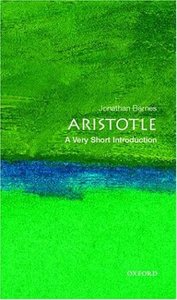
And with a final-very-end-of-the-tail-note, I am currently reading Oxord University Press’ A Very Short Inroduction to Aristotle by Jonathon Barnes. From what I have read so far, I think Barnes must be an understated kind of guy. If it his idea of a 'very short introduction' than the Swiss Alps or the Urals are probably just sand dunes to Barnes. I'll have to thank him for keeping my neuron synapses firing away.
Happy Writing and Reading!
Sunday, February 26, 2012
A Tiny Bit Political: Economic Reform and Mining
A Tiny Bit Political: Economic Reform and Mining
I saw some great acts at the Perth Writers' Festival over the weekend and it's fast becoming one of my favourite events on the yearly calendar. I bought the following books: The Australian Movement by George Megalogenis (I read all his work - the beauty is that he adds cultural elements to his political/economic analysis), Making Trouble by Robert Manne, Prime Cut by Alan Carter and The Waterboys by Peter Docker.
 \
\
I don't intend to turn this blog into a political one. But I'll make an exception here - after all, it relates to a more politically natured panel at the festival. \
\I ventured an audience question to Peter Cleary and Robert Manne, and although I'm not usually prone to nerves, my voice trembled. I said to them that often in Australia there is a lack of economic reform in times of prosperity which affects us a decade later. Basically implying that Menzies' lack of reform did not aid Whitlam; Hawke and Keating aided Howard; and the Howard of later years and the recent Labor government have not done a lot either. So despite our relatively blissful times on a current global scale, we are not ensuring that the next decade will be as equally stable. Rudd certainly tried but the mining magnates bullied and bamboozled him, as did Gillard and Swan (I still can't fathom why he didn't wait for a new term before taking on a behemoth like the mining industry). I told Cleary that I agreed with his praise of the Norwegian model (in which the tax on petroleum mining is very high ,and the federal government also has a sizable stake all the mining companies too). And, after what must have appeared a diatribe in the making, I finally asked Cleary: How do you battle the corporate campaigners? We saw what happened to Rudd. How do you change the nation's psyche regarding the issue?
Manne answered on Cleary's behalf and I felt a childish buzz when he said it is a question that we all should be asking. Later on outside, Robert saw me and came over to reiterate that it was an excellent question (chuffed like a kid once again) and Cleary agreed and eagerly provided his own answer. (I won't quote either of them on the issue in case they are taken out of context).
The fact of the matter is that there are other solutions and we could (and should) be doing more in terms of economic reform, especially with regards to mining. It was both a pleasure and humbling experience to be able to later 'chew the fat' with two writers whose opinions and works I admire.

Monday, February 20, 2012
Recent Reads: 'Specimen Days' by Michael Cunningham and 'Claw of the Conciliator'
Recent Reads: Claw of the Conciliator by Gene Wolfe and Specimen Days by Michael Cunningham
On Claw of the Conciliator' by Gene Wolfe
There was just enough intrigue in Gene Wolfe's The Shadow of the Torturer to entice me to return to its sequel, Claw of the Conciliator. Although Wolfe is deserved of his many plaudits I do not believe he is the 'James Joyce' of speculative fiction as many critics claim; although from what I have read of his short fiction he may be more deserving of the title in that particular genre. Reading Claw of the Conciliator was déjà vu. Once more, I found myself liking but not mesmerised by Wolfe. He is simultaneously both brilliant and frustrating. The antiquated future successfully melds the genres of fantasy and sci-fi; Severian's sexual exploits and prowess, however, border on being of a debased nature (although they always hint at something deeper).
Wolfe at times seems to be taken by flights of fancy in terms of plot and his obsession with depth of meaning means coherency is often lost. His need for this many-layered depth can weigh the reader down and this is Wolfe's greatest flaw in the long form.
After hearing Gary K. Wolfe (whose views I admire and respect) on the Coode St Podcast comment on Wolfe's subtleties and layers, I initially thought thatGary
For instance, the green man from the future jars. This loud metaphor works though in this case as he represents a future whereby mankind photosynthesises like plants. And thanks to an article in Cosmos about a sea slug shown to me by a mate, Phil English (a Cosmos contributing writer), in which a unique slug eats one sole meal of algae in its infancy then actually photosynthesises from then onwards, Wolfe’s vision may one day be realised. And the colour of the slug, surprise, surprise, is green too.
Anecdotal scientific digressions aside, there is nothing subtle about many of Wolfe's metaphors. There is nothing subtle about drinking matte; there is nothing subtle about a detailed scripted play (layered with meaning) appearing in the middle of a novel; there is nothing subtle about a monstrous river deity appearing out of the blue (although that particular metaphor was lost on me). The list could go on.
Wolfe has purposefully crafted a novel with layered meaning in a world that blends medieval, the classics and a decaying future. But he is not subtle. His metaphors, although they often require cryptic solutions (which is stimulating for an astute reader) are anything but subtle. They, like the river monster, surge up at you signalling or rather screaming at you to look for something deeper and perhaps this is where Wolfe, despite his brilliance, disappoints.
On Specimen Days by Michael Cunningham

Michael Cunningham's Specimen Days is composed of three neat novellas, which all contain a twist at the end. In all three there is Lucas (Lucas, Luke and Luke), a small boy, with a weak body and oversized orange-shaped head; and Simon (whose character varies from a deceased brother; to a wealthy collector and seller of antiques; to an android searching for his soul); and Catherine (a street-smart impoverished girl; to Cat, a lit-loving African American detective; to Catareen, a Nadian – a species of alien that forms the persecuted class on Earth).
The three novellas are interlinked via Walter Whitman's poetry, which actually services the stories without jarring as much as I had anticipated, and a unique bowl (I will leave the later for the lit critics to analyse). The linked stories move fromNew York past, to the contemporary city, before culminating in the New York
Cunningham's prose is lyrical and effective for the most part. Although there were a couple of questionable bits of writing that stood out where Cunningham strives to be too clever and falls short. No guessing as to which adverb stands out below:
"Perhaps he had gotten up during the night and moved them, somnambulistically. No. They were nowhere."
And although Cunningham is an astute user of repetition - he uses it to considerable effect throughout Specimen Days - the following felt like a poor man's version of Cormac McArthy's The Road:
Overall however, Cunningham illustrates with these novellas that he is not a one-trick pony in that he successfully delivers three stories with vastly different voices. And to Cunningham's credit, all three have their own beautiful and steady rhythm. All three, like most ambitious works, also have their flaws. The ghostly-gothic In the Machine seems to climax and resolve too quickly after a slow-simmering build up of tension. The Children's Crusade falls into noir clichés and its attempt to change the African-American stereotype is too deliberate and calculated that it may further polarise readers (Cat, an African-American bomb-squad detective, is a literature major who everyone thinks is white on the phone). And Like Beauty relies on the canons of yesteryear science fiction, with chases, exotic alien prowess and alas, info-dumps.
Yet Specimen Days is certainly worth a look at for both writers and readers. Cunningham wins the reader over with his prose in general but he also embraces our most endearing quality, that of compassion. And in this sense, Cunningham has something meaningful to say. The recurring theme is illustrated in all three pieces via sacrifice of some sort.
All three stories contain their hero, and Cunningham here is a hero too in courageously exploring three genres (historical ghost story, detective thriller and sci-fi) to deliver a fine 'novel' or three 'loosely linked-novellas'. Regardless of what the form is labelled, I am glad that I read it and I am now eager to read another of his other novels, Flesh and Blood.
PS And a big 'thank you' to Deborah Hunn for recommending Specimen Days some time ago.
On Claw of the Conciliator' by Gene Wolfe
There was just enough intrigue in Gene Wolfe's The Shadow of the Torturer to entice me to return to its sequel, Claw of the Conciliator. Although Wolfe is deserved of his many plaudits I do not believe he is the 'James Joyce' of speculative fiction as many critics claim; although from what I have read of his short fiction he may be more deserving of the title in that particular genre. Reading Claw of the Conciliator was déjà vu. Once more, I found myself liking but not mesmerised by Wolfe. He is simultaneously both brilliant and frustrating. The antiquated future successfully melds the genres of fantasy and sci-fi; Severian's sexual exploits and prowess, however, border on being of a debased nature (although they always hint at something deeper).
Wolfe at times seems to be taken by flights of fancy in terms of plot and his obsession with depth of meaning means coherency is often lost. His need for this many-layered depth can weigh the reader down and this is Wolfe's greatest flaw in the long form.
After hearing Gary K. Wolfe (whose views I admire and respect) on the Coode St Podcast comment on Wolfe's subtleties and layers, I initially thought that
For instance, the green man from the future jars. This loud metaphor works though in this case as he represents a future whereby mankind photosynthesises like plants. And thanks to an article in Cosmos about a sea slug shown to me by a mate, Phil English (a Cosmos contributing writer), in which a unique slug eats one sole meal of algae in its infancy then actually photosynthesises from then onwards, Wolfe’s vision may one day be realised. And the colour of the slug, surprise, surprise, is green too.
Anecdotal scientific digressions aside, there is nothing subtle about many of Wolfe's metaphors. There is nothing subtle about drinking matte; there is nothing subtle about a detailed scripted play (layered with meaning) appearing in the middle of a novel; there is nothing subtle about a monstrous river deity appearing out of the blue (although that particular metaphor was lost on me). The list could go on.
Wolfe has purposefully crafted a novel with layered meaning in a world that blends medieval, the classics and a decaying future. But he is not subtle. His metaphors, although they often require cryptic solutions (which is stimulating for an astute reader) are anything but subtle. They, like the river monster, surge up at you signalling or rather screaming at you to look for something deeper and perhaps this is where Wolfe, despite his brilliance, disappoints.
On Specimen Days by Michael Cunningham
The three novellas are interlinked via Walter Whitman's poetry, which actually services the stories without jarring as much as I had anticipated, and a unique bowl (I will leave the later for the lit critics to analyse). The linked stories move from
Cunningham's prose is lyrical and effective for the most part. Although there were a couple of questionable bits of writing that stood out where Cunningham strives to be too clever and falls short. No guessing as to which adverb stands out below:
"Perhaps he had gotten up during the night and moved them, somnambulistically. No. They were nowhere."
And although Cunningham is an astute user of repetition - he uses it to considerable effect throughout Specimen Days - the following felt like a poor man's version of Cormac McArthy's The Road:
"The horse whinnied insistently. It needed to be fed. He went and fed the horse."
Yet Specimen Days is certainly worth a look at for both writers and readers. Cunningham wins the reader over with his prose in general but he also embraces our most endearing quality, that of compassion. And in this sense, Cunningham has something meaningful to say. The recurring theme is illustrated in all three pieces via sacrifice of some sort.
All three stories contain their hero, and Cunningham here is a hero too in courageously exploring three genres (historical ghost story, detective thriller and sci-fi) to deliver a fine 'novel' or three 'loosely linked-novellas'. Regardless of what the form is labelled, I am glad that I read it and I am now eager to read another of his other novels, Flesh and Blood.
PS And a big 'thank you' to Deborah Hunn for recommending Specimen Days some time ago.
Monday, February 6, 2012
24 recommended short stories from my 2011 reading
24 'standout' short stories from my 2011 reading
In 2011, I read 96 short stories, many of them longer short stories and novelettes. Initially, I wanted to provide a list of all the stories I had read. After a little reflection, however, I thought that a blog post would be more useful if it were just a list of the standouts. Feel free to query as some stories are more 'literary' and others 'genre'. If you want to discover where a story can be found (anthology or journal title), just ask away.
The Bloody Chamber' Angela Carter
'Waiting' Will Self
'Puss in Boots' Angela Carter
'The Bordello in Faerie' Michael Swanwick
'The Company of Wolves' Angela Carter
'Riding the Gigantosaur' Michael Swanwick
'The Lady of the House of Love' Angela Carter
'Reward Offered' Jon Bauer
'The Erl King' Angela Carter
'The Werewolf' Angela Carter
'The Courtship of Mr Lyon' Angela Carter
'Four-Letter Words' Ryan O'Neil
'Lollies' David McLaren
'Girls and Boys Come Out to Play' Michael Swanwick
'Harry' Emma Schwarz
'The Tiger's Bride' Angela Carter
'The Monkey Treatment' George RR Martin
'Outback' Ruby J. Murray
'Mother Grasshopper' Michael Swanwick
'Raggle Taggle Gypsy-O' Michael Swanwick
'Dirty Little War' Michael Swanwick
'North of Diddy-Wah-Diddy' Michael Swanwick
'Whaling the Multiverse' Mark Lee Pearson
'It's the Cheroot' Marion Halligan
Saturday, February 4, 2012
'Tales of Old Earth' by Michael Swanwick
Tales of Old Earth by Michael Swanwick.
Michael Swanwick is one of the more adventurous writers in the already imaginative field of speculative fiction. He is generally an economical storyteller and on occasion I felt myself craving more flesh and a slower pace, but that is not to dismiss an excellent collection. There is not much that Swanwick shies away from, which makes the childish cover misleading, especially considering the sex scene (including vivid and creative foreplay), which takes up much of the story in 'Midnight Express'.
Swanwick meddles with time past (as the title suggests) as well as the present and future, and there are also all those alternative realities too.
Although 'Scherzo the Dinosaur' and 'The Very Pulse of a Time Machine' are much lauded Hugo Award Winners they are not the highlight stories in this eclectic collection. 'Riding the Gigantosaur', 'Microcosmic Dog', 'Mother Grasshopper', 'North of Diddy-Wah-Diddy' and 'The RaggleTaggle Gyspsy-O' are all fabulous tales.
The first of the before mentioned, 'Riding the Gigantosaur', places the reader into the Cretaceous period with a comical story that completely captures the imagination, whereby a wealthy wheeler and dealer learns some humility as a gigantosaur (do not ask but read the story). 'Mother Grasshopper' deals with the ideas of time, life and death; all set on a planet that is a massive grasshopper, which could be metaphorically perceived as the pest, that we as humans are represented as in this morose tale. 'North of Diddy-Wah-Diddy' entails a train of passengers travelling to Hell and successfully explores issues of morality and liberation with Swanwick's ever vibrant and colourful characters. It is also a tale you can sink your reading teeth into at 22 pages. 'Microcosmic Dog' cleverly examines reality when Ellen Gillespie (with a name like that I imagine that Swanwick is an avid jazz fan) has a talking dog left in her luxurious New York apartment. From then on things are not as always as they have seemed. 'The Raggle Taggle Gyspy-O' is a time travelling adventure, full of romance and heroism, in which the idea unravels that memories are required for immortality. Once again, an early felatio scene made me briefly wonder why any Swanwick anthology would be marketed in this fashion - although sales to a wider audience is the blindingly obvious answer.
'In Concert' humorously and uniquely parallels the Communist movement with the rock music movement when the aged lead rocker, Lenin, pounds out lyrics like, 'You have nothing to lose but your chains.' Other strong stories include: 'Wild Minds', 'Radiant Doors' and 'The Changeling's Tale'.
Tales of Old Earth is layered with meaning and that is the beauty of Swanwick's short fiction: he can encourage a reader to reflect but he never loses their attention. And Swanwick at his worst - in this collection I would say it is the Nebula Award winning, 'Ancient Engines' (the android tale tasted like a sedated version of PK Dick)- is still far better than many other writers in the field. Taking a leap into Michael Swanwick's bizarre world is something that will be ingrained in readers' minds long after they have finished reading.

Michael Swanwick is one of the more adventurous writers in the already imaginative field of speculative fiction. He is generally an economical storyteller and on occasion I felt myself craving more flesh and a slower pace, but that is not to dismiss an excellent collection. There is not much that Swanwick shies away from, which makes the childish cover misleading, especially considering the sex scene (including vivid and creative foreplay), which takes up much of the story in 'Midnight Express'.
Swanwick meddles with time past (as the title suggests) as well as the present and future, and there are also all those alternative realities too.
Although 'Scherzo the Dinosaur' and 'The Very Pulse of a Time Machine' are much lauded Hugo Award Winners they are not the highlight stories in this eclectic collection. 'Riding the Gigantosaur', 'Microcosmic Dog', 'Mother Grasshopper', 'North of Diddy-Wah-Diddy' and 'The RaggleTaggle Gyspsy-O' are all fabulous tales.
The first of the before mentioned, 'Riding the Gigantosaur', places the reader into the Cretaceous period with a comical story that completely captures the imagination, whereby a wealthy wheeler and dealer learns some humility as a gigantosaur (do not ask but read the story). 'Mother Grasshopper' deals with the ideas of time, life and death; all set on a planet that is a massive grasshopper, which could be metaphorically perceived as the pest, that we as humans are represented as in this morose tale. 'North of Diddy-Wah-Diddy' entails a train of passengers travelling to Hell and successfully explores issues of morality and liberation with Swanwick's ever vibrant and colourful characters. It is also a tale you can sink your reading teeth into at 22 pages. 'Microcosmic Dog' cleverly examines reality when Ellen Gillespie (with a name like that I imagine that Swanwick is an avid jazz fan) has a talking dog left in her luxurious New York apartment. From then on things are not as always as they have seemed. 'The Raggle Taggle Gyspy-O' is a time travelling adventure, full of romance and heroism, in which the idea unravels that memories are required for immortality. Once again, an early felatio scene made me briefly wonder why any Swanwick anthology would be marketed in this fashion - although sales to a wider audience is the blindingly obvious answer.
'In Concert' humorously and uniquely parallels the Communist movement with the rock music movement when the aged lead rocker, Lenin, pounds out lyrics like, 'You have nothing to lose but your chains.' Other strong stories include: 'Wild Minds', 'Radiant Doors' and 'The Changeling's Tale'.
Tales of Old Earth is layered with meaning and that is the beauty of Swanwick's short fiction: he can encourage a reader to reflect but he never loses their attention. And Swanwick at his worst - in this collection I would say it is the Nebula Award winning, 'Ancient Engines' (the android tale tasted like a sedated version of PK Dick)- is still far better than many other writers in the field. Taking a leap into Michael Swanwick's bizarre world is something that will be ingrained in readers' minds long after they have finished reading.
Sunday, January 29, 2012
Brief Book Review: 'New Australian Stories 2' Ed: Aviva Tuffield (2010)
Brief Book Review: New Australian Stories 2 Ed: Aviva Tuffield (2010)

Both Scribe Publications (New Australian Stories)and Black Inc. (Best Australian Stories) should be congratulated for their focus on nurturing and promoting Australian short fiction. These collections are credible homes, which promote both ‘name’ writers as well as those lesser known to a wider reading audience.
I am a late arrival to Australian short fiction and outside of Overland Literary Journal and the occasional Griffith Review I rarely read it at all. Short fiction from overseas just seemed more colourful in general. I was adverse to the repetitive, desiccated and colourless landscapes; as well as stories with plotlines so thin they seemed to dangle by a thread. Of recent times though (largely via journal reading) I have been pleased to discover the bevy of talented Australian writers out there. Even our landscapes, both rural and urban, have developed into something that intrigues me, possibly due to their tangibility.
The reason behind buying New Australian Stories 2 is that A.G McNeil, who works at New Edition Bookstore (while completing his PhD), told me that it included one of his pieces. So to support a fellow Perthite I bought the collection and enjoyed his story‘ Reckless, Susceptible’, which darkly but effectively delves into a relationship while including an interesting thread about animals.
The anthology itself consists of varying themes that all call for reflection within our own lives. There is a certain richness to many of the stories that can make reading challenging at times - but ultimately rewarding. Australian fiction in general seems to move at a slower pace and the old emphasis on place and drawing out almost every moment is still dominant; as is ‘realism’. It was refreshing to read two solid stories brave enough to venture away from the mundane in Sonja Dechian’s ‘The Cats of Unspeakable Kindness’and the metaphorical‘Moth’ by Jennifer Mills.
There were a handful of stories(which I will not mention) that I forced myself to plough through but that was more a matter of taste rather than quality. And a handful of stories is a winning ratio for any anthology of this magnitude – there are 36 all up.
Personally, I perceived eight tales as standouts. ‘Reward Offered’ by John Bauer is a superb piece which focuses on loneliness in the elderly and to what extent they may go to in the search for company and gratitude. The aged protagonist’s devilry captivates in a tale that is also quite touching. Ryan O’Neil’s ‘Four-Letter Words’ is clever, humorous, tragic and sentimental with a witty structure. My one overly pedantic criticism (a product of my Greek heritage) is that the word mania may have come into English via Latin but is of Greek origin and not Latin as stated. ‘Harry’ by Emma Schwarz, explores time, relationships and a partner’s influence when Harry, whose wife is critically ill, is taken on a hotel holiday by his daughter who aims to liberate him a little. ‘Papa’s Last Command’ by Jane McGown is an interesting rural story that successfully highlights issues of racism, bullying and ethics. Its ending, however, may appear a tad dramatic when compared to the surrounding stories. I was hooked by Ruby J. Murray’s ‘Outback’; a well-written story that looks at temptation and fidelity. An ever-present sense of danger is used most effectively in ‘The Chamber’by Meg Mundell to lure the reader in while presenting a range of issues. ‘Static’by Cate Kennedy is a wonderful story that says so much in its family-at-Christmastime fourteen pages; it also suitably lives up to its title in a thematic sense. And finally ‘The Cheroot’ by Marion Halligan is an illustration of sheer prose mastery. I found the plot itself slightly tacky but there is no denying Halligan’s wizardry here. The atmosphere, heat and isolated river setting are written by an author at the peak of her game. Her word choice and voice are as good as I have read.
‘After Rachel’ by Tony Birch; ‘Like a Virgin’ by Tegan Bennett Daylight and ‘Fallen Women’ by Jane Sullivan are also very strong works.
Some critics have presented an argument that many of the stories are not ‘new’, referring to the fact that a number are sourced from literary journals. I find this reasoning quite tenuous. Journals deserve their stories to be promoted to the wider reading public (as do writers). The immeasurable hours that go into a piece mean that a ‘newish’ story deserves as many opportunities to be read as possible.
For the more literary minded New Australian Stories 2 is well worth the read and it comes with the added bonus of allowing you to sample work from some of Australia’s gifted writers.
Sunday, January 15, 2012
Brief Reading and Writing Reflection on 2011
Books Read 2011

A Dance with Dragons George R.R. Martin
On Writing Stephen King
The Last Werewolf Glen Duncan
The Bloody Chamber Angela Carter
The Anansi Boys Neil Gaiman
The Lovely Bones Alice Sebold
The Confidential Agent Graham Greene
Flight Sherman Alexie
Song of Kali Dan Simmons
Istanbul The Imperial City by John Freely (History)
The Dog Said Bow Wow Michael Swanwick
The Great God Pan Arthur Machen
Monisgnor Quixote Graham Greene
The Shadow of the Torturer Gene Wolfe
The Quantity Theory of Insanity Will Self
Wolfborn Sue Bursztynski (YA novel)
The Secret History of Moscow Ekaterina Sedia
The Secret History of Moscow Ekaterina Sedia
In the Evil Hour Gabriel Garcia Marquez
I’m just a few stories from finishing New Australian Stories 2 (ed. Aviva Tuffield) and Tales of Old Earth by Michael Swanwick. Both will be included in next year’s list.
Only four female writers were included in my 2011 reading (last year they were all male bar one). I do feel as though this is a habit I need to break. Needless to say, Sue Bursztynski’s novel was a great YA book (the first of the genre that I’ve read in a decade); I bought Alice Sebold’s other novel The Almost Moon after being more than impressed by The Lovely Bones and I have fallen for Angela Carter’s breathtaking prose and consequently swooped on whatever of hers I could find. So hopefully I’ll read a few more female writers in 2012 (I choose from my ‘books to be read shelves’ at random). As usual there was far more parity in my short fiction reading.
I have also read more spec fic/genre than the norm and asides from providing a great escape it was a pleasure to see some excellent work in the field.
Journals
I am now subscribing to Meanjin to partner Overland Literary Journal (a journal I adore) and ASIM (for my genre hit). It is a relief that Andromeda is still available in print as Aurealis has succumbed to the electronic form. I prefer reading fiction the old fashioned way – for some vague reason I tend to miss a lot on screen.
I have dropped my Dotdotdash subscription only because I buy it at their launches. Other Australian journals that I've read and enjoyed include: Kill Your Darlings, Wet Ink and Griffith Review. During 2012, I plan on reading the occasional Southerly and Island too.
From the US I have taken out a One Story subscription, a great concept in which a quality ‘longer short story’ arrives in your mail every three weeks. The idea being that the story itself is the focus and therefore liberated of any surrounding interference (advertising or even other stories). The first one will arrive soon.
There are many other captivating journals in the overseas market (the US have a plethora of outstanding ones). I’ve read: McSweeney’s Review, Tin House, The Paris Review, Granta, Zoetrope: All Story and of course The New Yorker (most of these I’ve picked up at either New Edition or Planet Bookstore here in Perth). In 2012 I would like to taste: Ploughshares, Harper’s, Atlantic Monthly, The Southern Review, Glimmer Train, New England Review and Crazy Horse. My subscription dilemma lives on...
In American speculative fiction I am planning on subscribing to one of the following: Asimov’s, Magazine of F&SF, Weird Tales (still waiting to see how it eventuates with the change of owners) and possibly Shimmerzine.
Interzone in the UK and On Spec in Canada may also be worth a look at.
Feel free to comment on any journal or give your own recommendations.
Short Stories
This year I have anally recorded the short fiction that I’ve read: 96 (many of them long short stories/novelettes). In my nerdy blog fashion I will put up a list of 24 of my favourite short stories from my 2011 reading, which represents a fair chunk at 25%. I am quite selective with my short fiction reading and all but a handful this year ranged from good to exceptional. So the 24 will be a recommended reading list for lovers of short fiction.
Novels
If you are interested in my thoughts on any of the novels feel free to ask or even comment on them yourself. I did not want to rank them and although I was surprisingly disappointed by Gabriel Garcia Marquez’ debut novel it has been a great reading year.
Writing Reflection
My first two stories that I had written were published in Dotdotdash5 (Dec 2010) and Andromeda Spaceways (April 2011) and I pinched myself. Then ‘Reading Coffee’ was published in Overland Literary Journal 204 (Sep 2011) and I was ecstatic (to put it mildly). I had always maintained a strong belief in the story but it was still a privilege for it to find a home in the pages of a literary journal I revere - especially as ‘Reading Coffee’ is at the ‘difficult-to-publish’ length of 5000 words. Contributing a couple of blog posts for the Overland website was also a treat.
With my first publication I thought it might have been the work of the Goddess Tyche; the second made me think that perhaps I should scribble away some more, especially as they were both foundational pieces in my writing development (a cause for celebration rather than denigration); and the third both aided and buttressed my self-belief as a writer.
Blogging
I’ll just continue with my sporadic and hackneyed café posts. I don’t aim for them to be anything more than raw and unpolished as my chief focus is on writing fiction. Hopefully the posts are enjoyable and informative to some of the many out there interested in the world of reading and writing.
Happy New Year!
Monday, January 9, 2012
'Istanbul: The Imperial City' by John Freely & 'On Writing' by Stephen King
Istanbul: The Imperial City by John Freely & On Writing by Stephen King
Over the past decade I have been an avid reader of Ottoman history, especially that of Constantinople/ Istanbul. While Constantinople: 1453 to Present by Philip Mansel is (to me) the epitomy on the subject, The Imperial City by John Freely is still an informative and interesting read with well chosen primary source exerpts that really add texture and colour to the work. It is a history of the city in its entirety, from the earlier Greek settlements to the Byzantine Emperors/Empresses, through to all the Sultans and eventually ending with Attaturk, the Father of the Modern Turkish Nation. As it covers a broader scope than Mansel's text it consequently does not have the richness of Constantinople: 1453 to Present but it is still an excellent overview of 'The City' and also an easy read. Anyone interested in Byzantine or Ottoman history would be missing out without reading The Imperial City.


King's biggest tip for emerging writers: simply write and read.
Over the past decade I have been an avid reader of Ottoman history, especially that of Constantinople/ Istanbul. While Constantinople: 1453 to Present by Philip Mansel is (to me) the epitomy on the subject, The Imperial City by John Freely is still an informative and interesting read with well chosen primary source exerpts that really add texture and colour to the work. It is a history of the city in its entirety, from the earlier Greek settlements to the Byzantine Emperors/Empresses, through to all the Sultans and eventually ending with Attaturk, the Father of the Modern Turkish Nation. As it covers a broader scope than Mansel's text it consequently does not have the richness of Constantinople: 1453 to Present but it is still an excellent overview of 'The City' and also an easy read. Anyone interested in Byzantine or Ottoman history would be missing out without reading The Imperial City.
Of recent times, I have found texts on the writing craft and process riveting . On Writing by Stephen King surpassed my expectations. It is an honest and humble memoir/writing text that I was thoroughly absorbed by. King's humility here is extraordinary; and his reading list at the end of the text shows just how literary minded he actually is. The snippets of prose he delivers are a welcome illustration of his refined skills as an author.
King's personal writing history and his recovery from a chilling accident captivate; his writing tips (avoid the passive voice, murder your darlings and avoid adverbs) are useful as are his ideas on creating characters with depth that avoid being charicatures or stereotypes. It is fascinating that King, in order to maintain a freshness of story, usually advocates for little planning – his work largely comes from 'what if scenarios'. I am not a horror fan per se (although it is growing on me) but it is hard to deny King's success or extraordinary talents as an author. On Writing's openess and frankness makes you feel as if you are there with him, sitting in the room and having a chat over a cool drink or cup of coffee; as such, it is a highly recommended read for all writers, and also for those interested in the life of one of the bestselling authors of all time.
King's personal writing history and his recovery from a chilling accident captivate; his writing tips (avoid the passive voice, murder your darlings and avoid adverbs) are useful as are his ideas on creating characters with depth that avoid being charicatures or stereotypes. It is fascinating that King, in order to maintain a freshness of story, usually advocates for little planning – his work largely comes from 'what if scenarios'. I am not a horror fan per se (although it is growing on me) but it is hard to deny King's success or extraordinary talents as an author. On Writing's openess and frankness makes you feel as if you are there with him, sitting in the room and having a chat over a cool drink or cup of coffee; as such, it is a highly recommended read for all writers, and also for those interested in the life of one of the bestselling authors of all time.
King's biggest tip for emerging writers: simply write and read.
Wednesday, December 21, 2011
On the Simple vs Continuous Tense
On the Simple vs Continuous Tense
A couple of years ago at a writing workshop, I heard a book reviewer of a prominent Australian newspaper berate an emerging author over her use of the continuous tense. 'You never, ever should use it,' he said, slapping her work on to the table like some theatrical arsehole.
The reviewer was not alone, many writers demonise the continuous tense, often falsely labelling it passive.
But I use the continous tense now and then. Why? Because when used cleverly it works. It can:
'Mark knows she is looking at him, knows she is running her finger over her lip, which means: nervous, unsure, undecided.'
The above achieves all the before mentioned points: time slows down to capture that moment and this further highlights Mark's observations, emphasising the sense of attraction. Of course, change it all into the present simple and it still functions well (albeit at a quicker pace) but I think that Murray chose the right tense for that particular moment of the story. And moments are a writer's chief focus - how long a writer lingers on them is debatable and dependent on style, pacing and taste.
No matter what you might have been told, the continuous tense is still a great tool to have in your writing arsenal.

A couple of years ago at a writing workshop, I heard a book reviewer of a prominent Australian newspaper berate an emerging author over her use of the continuous tense. 'You never, ever should use it,' he said, slapping her work on to the table like some theatrical arsehole.
The reviewer was not alone, many writers demonise the continuous tense, often falsely labelling it passive.
But I use the continous tense now and then. Why? Because when used cleverly it works. It can:
- Place emphasis on time and place. It implies that the act istself is important.
- Add richness to a literary piece in a poetic sense and it can slow the narrative pace
- Highlight the character in action.
'Mark knows she is looking at him, knows she is running her finger over her lip, which means: nervous, unsure, undecided.'
The above achieves all the before mentioned points: time slows down to capture that moment and this further highlights Mark's observations, emphasising the sense of attraction. Of course, change it all into the present simple and it still functions well (albeit at a quicker pace) but I think that Murray chose the right tense for that particular moment of the story. And moments are a writer's chief focus - how long a writer lingers on them is debatable and dependent on style, pacing and taste.
No matter what you might have been told, the continuous tense is still a great tool to have in your writing arsenal.

Thursday, December 15, 2011
Dotdotdash Subscriberthon
Dotdotdash Subscriberthon
I confess that I no longer subscribe to Dotdotdash but before you condemn me to the gallows (this is about a subscriberthon after all) let me explain why: they're based in Perth and I attend their funky, innovative and varied launches where I buy a journal as part of the entry package (or is it on top of it? - I can't quite recall).

I think I'll always like Dotdotdash; they're local (with a national following) and they also published my first story in Dotdotdash5, December 2010. Almost my entire writing group has published there too. Congrats to Mark Welker (now in Melbourne), Daniel Simpsom and Phil English!
The thing I really admire about the journal is that authors remain anonymous during the submission process. Your name and previous publications mean zilch so the playing field levels out. Of course that has meant that the editor, Steven Finch, has missed out on some 'name' authors but then again he's published some too and he, and the editing team, have the undeniable pleasure of unearthing new and exciting talent.
I wish Steve and his gang continued success in the difficult world of literary journals. With the way they promote and market themselves, they certainly deserve their rapid growth. Join them on Facebook to keep up with the fun.
I confess that I no longer subscribe to Dotdotdash but before you condemn me to the gallows (this is about a subscriberthon after all) let me explain why: they're based in Perth and I attend their funky, innovative and varied launches where I buy a journal as part of the entry package (or is it on top of it? - I can't quite recall).
But subscribe away if you're outside of Perth (or if you're a Perthite not interested in attending their launches). The journal chiefly specialises in fiction and has a spanky layout in coloured glossy pages. It's a celebration of art, photography, graphic design, short fiction, creative fiction and plenty of poetry
.
I think I'll always like Dotdotdash; they're local (with a national following) and they also published my first story in Dotdotdash5, December 2010. Almost my entire writing group has published there too. Congrats to Mark Welker (now in Melbourne), Daniel Simpsom and Phil English!
The thing I really admire about the journal is that authors remain anonymous during the submission process. Your name and previous publications mean zilch so the playing field levels out. Of course that has meant that the editor, Steven Finch, has missed out on some 'name' authors but then again he's published some too and he, and the editing team, have the undeniable pleasure of unearthing new and exciting talent.
I wish Steve and his gang continued success in the difficult world of literary journals. With the way they promote and market themselves, they certainly deserve their rapid growth. Join them on Facebook to keep up with the fun.
Saturday, December 10, 2011
More Great Short Stories
More Great Short Stories
The whole concept is a little daggy and all in good fun. I'll reitirate that the before mentioned stories consist of some of my current personal favourites and are certainly not indicative of what is ‘best'. For instance with some stories such as "The Bordello in Faerie", I was concentrating on what I loved about it rather than its flaws. In a year or two who knows, the list may be completely different. I think it's already changing - a state of permanent flux if you'd like
The whole concept is a little daggy and all in good fun. I'll reitirate that the before mentioned stories consist of some of my current personal favourites and are certainly not indicative of what is ‘best'. For instance with some stories such as "The Bordello in Faerie", I was concentrating on what I loved about it rather than its flaws. In a year or two who knows, the list may be completely different. I think it's already changing - a state of permanent flux if you'd like
There are other notable stories, outside of the many gems written by Will Self, Angela Carter and Joyce Carol Oates, which I’d recommend to any reader:
A Few More Favourites
A Few More Favourites
'The Swimmer' by John Cheever
'A Bullet in the Brain' by Tobias Wolf
'Lollies' by David McLaren in Dotdotdash5 (an Australian story)
'The Use of Force' by William Carlos Williams
'D.P' by Kurt Vonnegut Jr
'The Killers' by Ernest Hemmingway
'A Habit of Waste' by Nalo Hopkinson
'The Way of the Cross and Dragon' by George R.R. Martin
'Jefty is Five' by Harlan Ellison
'Girls and Boys, Come Out to Play' by Michael Swanwick
As always, interested in your thoughts on the short story list and any of your own favourite works.
'Girls and Boys, Come Out to Play' by Michael Swanwick
As always, interested in your thoughts on the short story list and any of your own favourite works.
Sunday, December 4, 2011
Short Story: 'Rachel in Love' by Pat Murphy
"Rachel in Love" by Pat Murphy

"Rachel in Love" by Pat Murphy is one of my all-time favourites. Once again, I first read the story in the Locus Awards anthology.
Rachel’s father is not a chimpanzee but she is and she also has memories of being a human daughter. When her ‘scientist-father’ passes, Rachel, the chimp-girl, discovers the big bad world. Pat Murphy has produced a wonderful story, deservedly winning both the Locus and Nebula awards. "Rachel in Love" deals with the in-between natures of both the human and the animal; as well exploring issues of identity and acceptance.
The hybrid nature of Rachel gelled with me as some of my writing touches on similar themes. Murphy has crafted a superb story with a seemless, but also touching, narrative
Rachel’s father is not a chimpanzee but she is and she also has memories of being a human daughter. When her ‘scientist-father’ passes, Rachel, the chimp-girl, discovers the big bad world. Pat Murphy has produced a wonderful story, deservedly winning both the Locus and Nebula awards. "Rachel in Love" deals with the in-between natures of both the human and the animal; as well exploring issues of identity and acceptance.
The hybrid nature of Rachel gelled with me as some of my writing touches on similar themes. Murphy has crafted a superb story with a seemless, but also touching, narrative
Subscribe to:
Posts (Atom)